



|
| Corryn Persichilli ’99 interviewed her grandmother,
Mary Feaster. When asked about the subject of Persichilli’s report, Paces said, "I was hesitant to make it a family roots kind of project, but Corryn was able to see her grandmother in a different kind of light. It’s hard to imagine talking to your grandmother about birth control, but she could do that when looking at it as a historian." Persichilli spoke to her grandmother about what it was like to be a housewife during the Korean War. Initially, Persichilli had intended to focus on the war itself, but her grandmother had been too busy to pay attention to politics, raising two babies in Trenton while her husband worked in Philadelphia. In her report, Persichilli wrote about her first lesson in oral histories, "You cannot pick a strict topic and expect to stick to it. Interviews seem to take you in unexpected directions." Indeed, Persichilli encountered many surprises while interviewing her grandmother. In the history books, she had read about "the Fabulous Fifties," where money was abundant and prosperity the rule. But she learned the exception from her grandmother— things weren’t so great for everyone. Whether or not you were well-off depended largely on your social class. 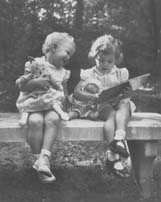 As
a child growing up, Feaster told Persichilli that her family was very
poor. "My father smoked a pipe so we used to collect the cigarette
butts in the gutter so he could empty the tobacco out, smoke the tobacco
in his pipe," Feaster said. As
a child growing up, Feaster told Persichilli that her family was very
poor. "My father smoked a pipe so we used to collect the cigarette
butts in the gutter so he could empty the tobacco out, smoke the tobacco
in his pipe," Feaster said. An excerpt of Persichilli’s report describes what Feaster’s life was like when she married her husband. More importantly, it reveals how Feaster feels about the past today: We started out with nothing. I didn’t know enough. I didn’t know even about birth planning or any of those things, which is good to know...to know your circumstances...get your education. I mean there’s so much involved...before you start as I did...run off and get married. I just thought you get married and you have children. I mean that’s the way it is. Well I shouldn’t have ran away. I had no real reason to. And I should have finished school...definitely finished school. I should have tried to further my education. I just thought women didn’t go to college at that time. Those things weren’t pushed on women in those days. The work for the oral history course was a far cry from what students are normally accustomed to. Instead of squinting to read lines in a book, students taking Paces’ course were able to stare into the eyes of survivors—of economic disasters, of wars, of holocausts. Many were old, some were suffering, but all had an untold story. Students dug deep until they found it, pulling out precious memories as if they were diamonds. Paces specializes in modern eastern Europe, but she had always considered teaching an oral history class. "Students were essentially comparing the memory of personal people with that of historians," Paces said. "It made the students realize that history is written from a political perspective. It has only been very recently that we’ve considered how individuals and families are effected." "This seminar taught me that history is not about old books on dusty shelves," Amanda Short ’00 said. "This was the first time that I was able to see how one person experienced certain events. History is not always about the past." The complete reports of all the students in Cynthia Paces’ oral history class are available on campus at the Roscoe L. West Library. Those students’ reports not featured here are: o Maureen Camphire ’00 interviewed several conscientious objectors who worked in Civilian Public Service camps and volunteered for special projects during World War II. o Betty Ann Coppola ’99 conducted interviews with Dorothy Holt Leeds, an 86-year-old resident of Hamilton who spoke about the role of women during the Great Depression. o Stephan Fisher ’00 interviewed Emerich Ohlbaum, who spent time in a Hungary labor camp during World War II. o Cristin M. Hoopes ’99 interviewed her next door neighbor, Carmen Scotto, who volunteered with the United Services Organization (USO), created in 1941 by religious and welfare groups to support the war effort. o Fabio Iucolino ’99 interviewed Eugene Fried, a Holocaust survivor. o Joe Ribsam ’00 did an in-depth study of the Newark racial riots that pulverized the city in the summer of 1967. He spoke to two white liberals, Dr. Charles Nanry and his wife, Jackie, both of West Windsor. o Amanda Short ’00 interviewed Belle Sandak about her experiences as a Polish immigrant to America. |